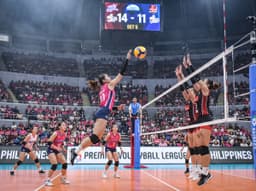
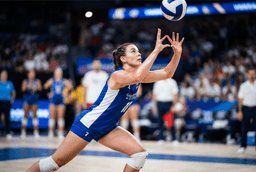
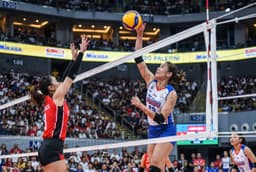
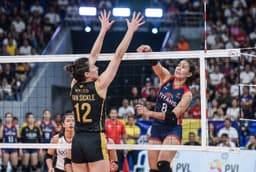
Volleyball Serving Technique: Mastering the Jump Float Serve
The modern volleyball game demands relentless pressure from the service line, and few skills shift momentum quite like the jump float. Unlike a heavy topspin serve that relies purely on high velocity, a properly executed float serve exploits fluid dynamics and aerodynamic turbulence. By eliminating ball spin entirely, the serve encounters unpredictable air resistance, causing it to drop or drift erratically right as it reaches the net tape. Professional leagues across the globe showcase world-class athletes who use this weapon as their primary strategy for serve receive disruption.
Mastering an elite volleyball serving technique requires breaking down every micro-phase of the movement. Consistent execution starts long before your feet leave the floor—it begins with a precise toss, disciplined approach rhythms, and rigid hand contact.
The Aerodynamic Science: Jump Float Biomechanics
To understand why the jump float confuses top-tier passers, you must examine jump float biomechanics. When a volleyball travels with zero spin, it experiences asymmetrical air resistance driven by unsteady vortex shedding. As airflow moves across the smooth leather or composite panels and raised seams, the boundary layer transitions unevenly between laminar and turbulent states.
Key Physical Factors Driving Movement
Magnus Effect Elimination: Topspin serves utilize the Magnus effect to pull the ball down predictably. A jump float negates this force, keeping the ball's flight path linear until momentum drops.
Seam Orientation and Drag Variations: As air hits the asymmetrical seam layout of an unspinning ball, forces continuously shift. This causes sudden lateral movement or sharp vertical drops in the last 5 feet of flight.
Kinetic Chain Efficiency: Generating speed without spin requires sequential energy transfer—starting at the foot strike, moving through hip-shoulder rotation, and ending at a rigid wrist contact.
3 Elite Volleyball Training Drills for Serve Disruption
Integrating structured, target-driven volleyball training drills into your weekly practice routine is essential for translating biomechanical theory into court consistency.
1. The Deep-Zone Target Box Drill
Primary Focus: Directional control and deep-line precision.
Setup: Place target mats or floor markers in deep Zone 1, deep Zone 5, and the seam between Zones 6 and 1.
Execution: Perform 3 sets of 10 jump float serves. Award 3 points for striking a target mat directly with zero spin, 1 point for landing within a 2-foot radius, and 0 points if any topspin rotation is detected.
2. Net-Tape Clearance Elastic Drill
Primary Focus: Flattening serve trajectory to minimize passer reaction time.
Setup: Stretch an elastic training line 1.5 feet directly above the top tape of the net.
Execution: Serve 20 reps that must pass between the net tape and the elastic line. High-looping serves that pass above the training line are counted as out-of-bounds, enforcing low-altitude trajectory drives.
3. The Short-Serve Option Drill
Primary Focus: Front-row passer disruption and depth variation.
Setup: Place target cones inside the 10-foot (3-meter) attack line in Zones 2, 3, and 4.
Execution: Adjust contact force and follow-through depth to hit short float serves that drop right over the tape. This forces front-row attackers to step back and pass, disrupting their offensive transition timing.
Tactical Execution: How to Disrupt Opposing Serve-Receive Systems
A technically sound jump float serve is most effective when paired with tactical court awareness. Scouting opposing pass formations allows servers to target specific structural weaknesses:
| Target Formation Strategy | Primary Objective | Tactical Execution |
|---|---|---|
| Seam Exploitation | Drive miscommunication between two passers | Aim directly between Zone 6 and Zone 5 passers at chest height. |
| Front-Row Hitter Target | Disrupt opponent's offensive approach rhythm | Serve directly at the front-row outside hitter in Zone 4 to force early passing duty. |
| Bench-Player Substitution Target | Test cold receivers entering the rotation | Target newly substituted players on their very first receive rep. |
| Deep-Corner Isolation | Push passers out of optimal transition lines | Drive flat floats into the back corners of Zone 1 and Zone 5. |
TigerScores365 provides a comprehensive look at the sports world with live results, detailed player analytics, and the latest trending news. Browse our website to access a complete database of scores and stats designed to keep every fan fully informed and engaged.


PVL Fifth-Set Volleyball Strategy: Inside Philippine Volleyball History’s Greatest Deciding Frames
Anthony Edwards' Next Step: Elevating Playmaking in the Minnesota Timberwolves Offense
Lautaro Martinez Inter Milan Champions League Goals: Finishing Efficiency & UCL Stats
Rodri Tactical Performance: Defensive Midfielder Analytics & Pass Completion Breakdown
Kevin De Bruyne Champions League Performance: European Football Assist Leaders Analysis
Michael Olise Winger Analytics: Cross Accuracy & Chance Creation
Xavi Simons Tactical Analysis: Why His RB Leipzig Midfielder Stats Proved He Was Europe’s Most Complete Engine
Bayer Leverkusen Midfield Tactics: How Florian Wirtz Defined Modern Central Playmaking
Jamal Musiala Dribbling Stats & Analytics: Bayern Munich’s 2026 Playmaker
Bayern Munich Striker Performance: Harry Kane’s 2026 Bundesliga Analysis