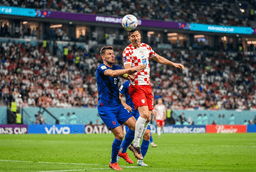
10 Greatest FIFA World Cup Upsets: Legendary Group Stage Giant Killers
The World Cup group stage is rarely a mere formality. While football's traditional superpowers often expect to cruise into the knockout rounds, history proves the opening phase is a high-stakes arena where complacency meets ambition. The tension of the FIFA World Cup group stages has produced some of the most stunning results the sport has ever seen—shattering tournament brackets and cementing underdog folklore.
To understand how minnows defeat giants, we look back at the most seismic group stage surprises in international football history, evaluating what made each tactical triumph possible.
At a Glance: Greatest FIFA World Cup Group Stage Upsets
| Match | Tournament | Final Score | Key Historical Impact |
|---|---|---|---|
| North Korea vs. Italy | England 1966 | 1-0 | Tournament debutants eliminate two-time champions in Ayresome Park. |
| Algeria vs. West Germany | Spain 1982 | 2-1 | Prompted FIFA to mandate simultaneous final group stage kickoffs. |
| Cameroon vs. Argentina | Italia 1990 | 1-0 | 9-man Indomitable Lions defeat Diego Maradona’s reigning champions. |
| Senegal vs. France | Korea/Japan 2002 | 1-0 | Debutants top defend champions featuring top-scorer talent from Europe. |
1. The 1966 Stunner: North Korea Shocks Italy (1-0)
Before the world watched Portugal and Brazil dominate headlines in 1966, the tournament in England delivered arguably the ultimate historic football match surprise. Italy, two-time World Cup champions, arrived in Middlesbrough heavily favored against a North Korean side making its global debut.
The Italians controlled early possession but were repeatedly thwarted by disciplined North Korean defending and relentless pressing. The defining moment arrived in the 43rd minute: dentist-turned-footballer Pak Doo-Ik capitalized on a loose clearance, driving a low, precise finish past Italian goalkeeper Enrico Albertosi.
North Korea held firm throughout the second half to secure a legendary 1-0 victory. This benchmark World Cup giant-killing eliminated Italy in the group stage and sent North Korea into an iconic quarter-final clash against Portugal.
2. Algeria Stuns West Germany in 1982 (2-1)
The 1982 World Cup in Spain witnessed one of football’s greatest tactical shocks when Algeria faced reigning European champions West Germany in Gijón. Arriving with a squad featuring superstars like Karl-Heinz Rummenigge, the German side publicly dismissed the African debutants prior to kickoff.
Algeria responded with fearless, high-tempo passing and fluid movement. In the 54th minute, Rabah Madjer capitalized on a rapid counter-attack to give Algeria a deserved lead. Although Rummenigge equalized in the 67th minute, Algeria replied just 59 seconds later with a brilliantly engineered goal from Lakhdar Belloumi.
Algeria held on for a historic 2-1 win. While West Germany eventually reached the final after the controversial Disgrace of Gijón—a sluggish 1-0 win over Austria that engineered both European nations' progress—Algeria’s display forced FIFA to permanently change group-stage rules, mandating that final group matches be played simultaneously to prevent collusion.
3. Cameroon’s 1990 Emergence Against Reigning Champions Argentina (1-0)
Argentina opened Italia 1990 as reigning World Cup champions, led by Diego Maradona. Facing them in the opening match at San Siro was Cameroon, an Indomitable Lions side respected within Africa but largely discounted on the world stage.
Cameroon adopted a physical, high-intensity defensive structure that disrupted Argentina’s playmakers. Even after André Kana-Biyik was shown a red card in the 61st minute, the 10-man African side struck six minutes later when François Omam-Biyik met a soaring header that squeezed past Nery Pumpido.
Despite later losing Benjamin Massing to a second red card following an infamous challenge on Claudio Caniggia, 9-man Cameroon held on for a 1-0 victory. The triumph catapulted African football into the international spotlight and established Cameroon as the ultimate World Cup giant killer, paving their way to a historic quarter-final run.
4. Senegal Overcomes Defending Champions France in 2002 (1-0)
The opening fixture of the 2002 FIFA World Cup in Seoul paired reigning World and European champions France against debutants Senegal. France brought a squad stacked with top-tier talent, including Thierry Henry and David Trezeguet, though they were missing the injured Zinedine Zidane. Notably, Senegal’s entire 23-man roster played professionally in the French leagues, adding deep familiarity to the match.
Engineered by manager Bruno Metsu, Senegal deployed a disciplined mid-block and explosive counter-attacks. In the 30th minute, El Hadji Diouf broke down the left flank and squared a ball that Papa Bouba Diop scrambled into the net.
France hit the woodwork twice and controlled possession late, but Senegal’s resolute defense kept the champions at bay. Senegal's 1-0 victory signaled a changing tide in global football competitiveness, demonstrating that tactical organization and athletic intensity could regularly disrupt established elite powers.
Why the 48-Team 2026 FIFA World Cup Will See Even More Upsets
As football looks toward the 2026 FIFA World Cup hosted across the United States, Mexico, and Canada, the tournament's unprecedented expansion to 48 teams creates the perfect recipe for new group stage chaos.
Narrowing Quality Gaps: Modern sport science, international scouting, and centralized tactical coaching mean confederations outside Europe and South America are more organized than ever.
3-Team Group Dynamics: With the revised format bringing more nations to the global stage, underdog teams need only one tactical masterclass or single counter-attacking breakthrough to secure qualification.
Increased Matches: More group stage fixtures naturally expand the surface area for historic World Cup upsets.
The Lasting Legacy of Group Stage Chaos
These historic fixtures highlight a fundamental truth about international football: pedigree guarantees nothing once the whistle blows. The intense pressure of the FIFA World Cup group stage—where dropped points instantly jeopardize a nation's multi-year campaign—creates an environment where ambition regularly triumphs over reputation.
As emerging nations continue to close the technical gap, these classic giant-killings serve as timeless blueprints for underdog success and vital warnings for traditional powers.
TigerScores365 provides a comprehensive look at the sports world with live results, detailed player analytics, and the latest trending news. Browse our website to access a complete database of scores and stats designed to keep every fan fully informed and engaged.


2026-27 NBA Season Preview: Title Contenders & Championship Odds Analysis
Philadelphia 76ers Roster Breakdown: Can LeBron James & Jaylen Brown Lead Philly to an NBA Championship?
Philadelphia 76ers Roster Analysis: LeBron James, Joel Embiid & 2026-27 NBA Outlook
Positionless Basketball Strategy: The NBA Playmaking Evolution & Rise of Versatile Forwards
Milwaukee Bucks vs. Charlotte Hornets: Preseason Matchup Preview & Roster Breakdown
San Miguel Beermen vs Terrafirma Dyip: PBA Basketball Game Today Preview, Standings & Rosters
Barangay Ginebra San Miguel vs San Miguel Beermen: PBA Rivalry, History, and Recent Match Results
Rain or Shine Outlasts Magnolia 98-97 in Thrilling PBA Governors' Cup Encounter
Spurs vs Timberwolves Game Preview: Projected Lineups, Key Stats & Prediction
RJ Abarrientos: Player Profile, PBA Career Stats & Ginebra Impact